
Key Takeaways
- Trust comes before traffic — a credible page must answer a donor's basic questions before any promotion begins.
- Start with the inner circle to build early social proof, then expand outward in layers.
- Use a multichannel approach: personal outreach, email, social media, community groups, PR, and paid promotion.
- Updates are marketing assets, not admin — they keep momentum alive and give supporters new material to share.
- Never guarantee tax deductions or use fake urgency, fake donors, or unverifiable claims.
Launching a GoFundMe page is easy. Building enough trust, attention, and repeated visibility to reach a meaningful fundraising goal is much harder. Charity and donation campaigns compete not only with other fundraisers, but also with busy social feeds, donor skepticism, limited attention spans, and the natural hesitation people feel when they are asked to give money online.
Effective GoFundMe marketing is therefore not a matter of posting the link everywhere and hoping it goes viral. It is a structured process that begins with a credible campaign page, activates the people closest to the cause, expands through trusted communities, and uses consistent updates to keep the fundraiser relevant. The best campaigns make it easy for people to understand the need, believe the organizer, see how funds will be used, and choose a helpful action: donate, share, introduce, volunteer, or advocate.
This guide expands on Pledgewire' trust-first approach and applies it specifically to personal causes, registered charities, nonprofit appeals, medical fundraisers, humanitarian campaigns, education funds, community projects, memorial funds, and emergency relief efforts.
Why GoFundMe Marketing Is Different from Product Crowdfunding
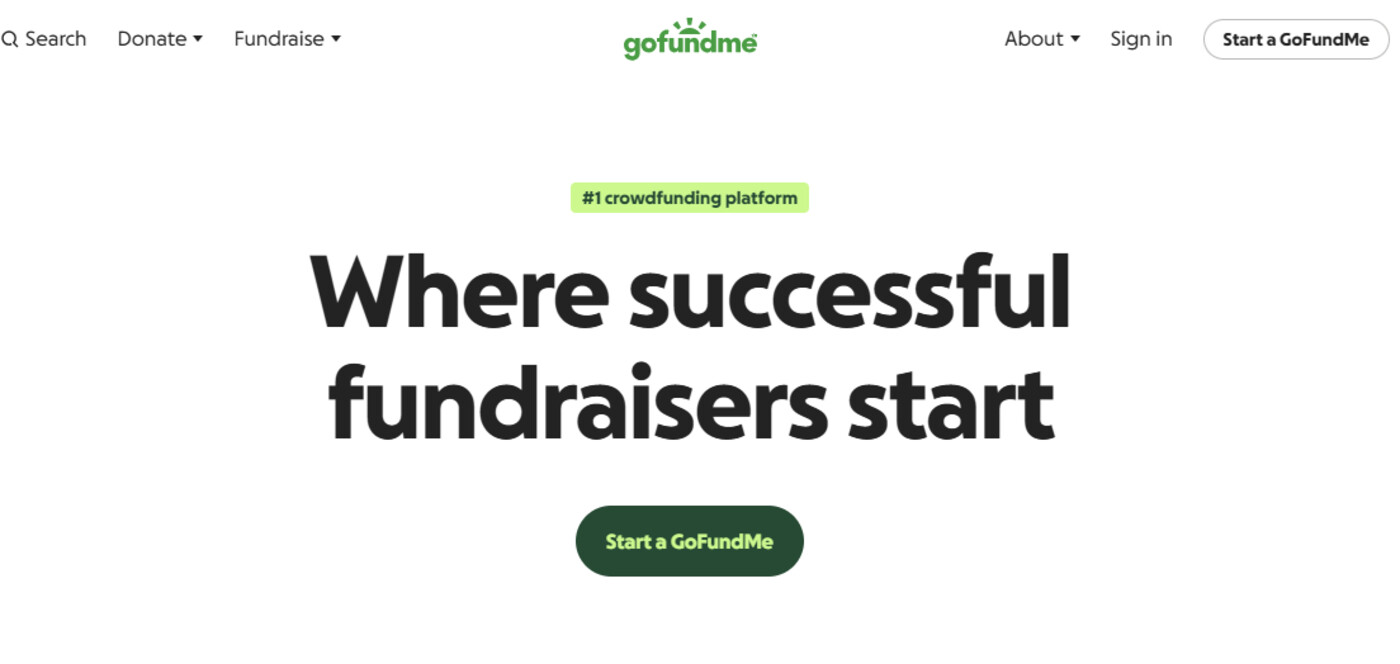
Marketing a Kickstarter gadget and marketing a GoFundMe medical appeal may use some of the same channels, but the donor psychology is different. Product crowdfunding usually gives supporters a tangible reward, early access, or a discount. Donation crowdfunding generally offers no financial return and no product benefit. The motivation comes from empathy, shared identity, community responsibility, urgency, faith, social proof, or confidence in the expected impact.
Several strategic lessons transfer from product crowdfunding to donation fundraising: clarify the message, understand the audience, address doubts before they become objections, and coordinate multiple channels rather than depending on a single post. The adaptation is important — a charity campaign must replace product benefits with proof of need, proof of legitimacy, and proof of impact.
| Campaign Type | Primary Trust Requirement | Strongest Initial Audiences |
|---|---|---|
| Personal or medical | Organizer relationship, authentic story, clear costs, beneficiary consent | Family, friends, workplace, faith groups, local community, condition-specific communities |
| Registered charity | Legal identity, mission, program evidence, governance, tax status, impact reporting | Existing donors, volunteers, corporate partners, local media, cause-aligned audiences |
| Emergency or relief | Verified urgency, location, beneficiary pathway, rapid updates, responsible fund distribution | Diaspora, local networks, humanitarian communities, news audiences, partner organizations |
| Education / scholarship | Student or school identity, exact tuition or program need, timeline, outcome | Alumni, parents, educators, employers, professional associations, community leaders |
| Community project | Local relevance, project scope, leadership, permissions, budget and public benefit | Residents, local businesses, associations, elected/community representatives, neighborhood media |
Build Trust Before You Try to Increase Traffic
Traffic only helps when the campaign page is capable of converting attention into confidence. Before spending money, contacting the media, or asking a large community to share the link, review the fundraiser through the eyes of a cautious donor. A visitor should not have to investigate the organizer on their own to understand the basic facts.
A credible campaign should answer the following questions quickly:
- Who is the fundraiser for, and who is organizing it?
- What happened, or what problem is the campaign trying to solve?
- Why is financial support needed now?
- How much is required, and how was that figure calculated?
- How will the money be received, managed, and used?
- What evidence, documents, partners, or public information support the story?
- What happens if the fundraiser raises less or more than the stated goal?
- How will donors receive progress and impact updates?
GoFundMe's official guidance on asking for donations stresses transparency, while its campaign-story guidance emphasizes honesty, clarity, and authentic visuals. GoFundMe also advises organizers to use real images and obtain permission from the people shown. For sensitive causes, this means balancing emotional detail with dignity, consent, privacy, and the long-term digital footprint of the beneficiary.
Trust-building assets may include a realistic cost breakdown, a short statement from the beneficiary, a letter from a school or community association, a charity registration number, a link to an official organization website, a press mention, photographs of the project, invoices with sensitive details removed, or an explanation of how the organizer is connected to the cause.
Do not describe every GoFundMe contribution as tax-deductible. Donations to personal fundraisers are generally personal gifts and are not guaranteed to be tax-deductible; certified nonprofit fundraisers have different treatment. Use accurate wording and direct donors to qualified tax advice where necessary.
Optimize the GoFundMe Page Before Promotion Begins
A campaign page is the central conversion asset.
Every social post, email, WhatsApp message, interview, flyer, QR code, and advertisement eventually sends people to that page. If the page is vague, poorly structured, or visually unconvincing, additional marketing simply increases the number of people who leave without donating.Write a specific, human title
The title should identify the beneficiary or cause and the outcome the fundraiser supports. Avoid titles that are so broad that they could describe thousands of campaigns. "Support Our Cause" is weak. "Help Amina Complete Emergency Heart Surgery" or "Rebuild the Riverdale Community Food Pantry After the Flood" immediately communicates who needs help and why.
Use an authentic cover image
The main image should be clear, respectful, relevant, and easy to understand on a mobile screen. A real photograph usually builds more trust than a generic stock image or a heavily designed poster. When the campaign involves a vulnerable beneficiary, obtain consent and choose a photo that preserves dignity.
Structure the story for readers who skim
Most visitors will scan the first few lines before deciding whether to continue. Use a short opening that states the situation, the beneficiary, the immediate need, and the requested outcome. Then expand the story in a logical sequence:
- 1The situationWhat happened or what the organization is trying to accomplish.
- 2The human contextWhy the cause matters and who is affected.
- 3The financial needExact expenses, timing, and any funding already available.
- 4The planHow donations will be applied and who is responsible.
- 5The evidenceDocuments, partners, history, photos, or public information.
- 6The call to actionDonate, share, introduce, or support in another specific way.
Set a defensible goal
The fundraising goal should reflect the real need, not an arbitrary large number. Include platform transaction fees, foreseeable costs, and a reasonable contingency where appropriate. Because fee examples vary by country, organizers should check the current pricing page for the campaign's location rather than copying a figure from another market.
Add a "what each amount can do" section
Giving examples make the campaign more concrete. A medical fundraiser might explain that $25 covers local transport, $100 contributes to diagnostic tests, and $500 supports a treatment deposit. These examples should be accurate, not artificially precise, and should not imply that funds are restricted to a specific item unless that is genuinely the case.
Make the organizer and beneficiary relationship clear
A donor should know whether the organizer is the beneficiary, a relative, a friend, a nonprofit representative, a school official, or a community volunteer. Clarity about control of funds is one of the strongest ways to reduce suspicion.
Identify the Donor Audiences Most Likely to Care
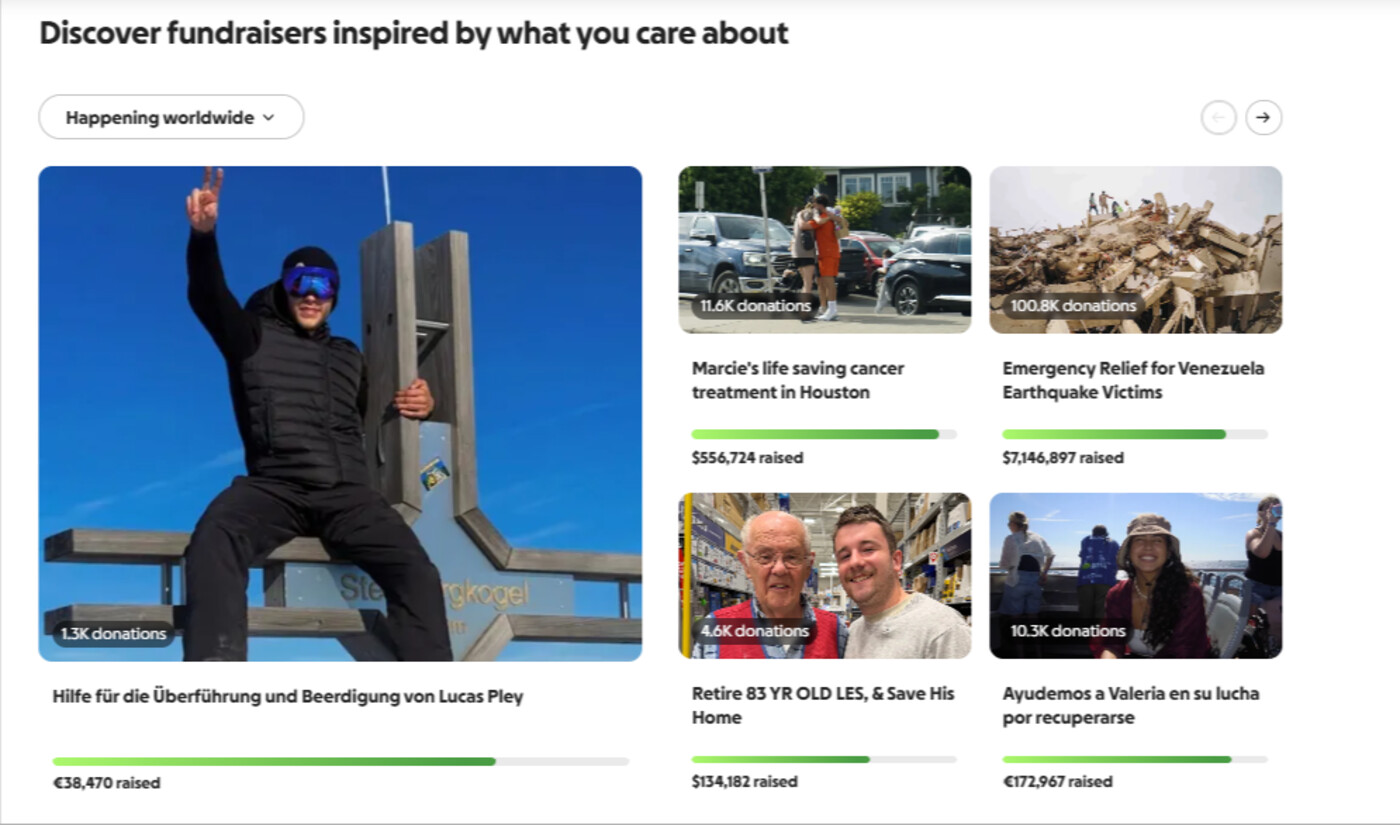
One of the biggest marketing mistakes is treating "everyone" as the target audience. A cause may deserve broad support, but the earliest and highest-converting audiences are usually specific groups with an existing reason to care.
Build the donor audience in layers:
- Inner circle: family, close friends, coworkers, existing donors, volunteers, board members, and people directly connected to the beneficiary.
- Community circle: faith communities, alumni associations, neighborhood groups, schools, clubs, professional associations, local businesses, and diaspora networks.
- Cause-aligned circle: people affected by the same condition or issue, advocacy groups, nonprofit communities, relevant influencers, and specialist publications.
- Public discovery circle: social media users, press audiences, search traffic, newsletter audiences, and carefully targeted paid media.
Engaged supporters matter more than a large but passive follower count. Ten trusted people who write personal posts can create more credibility than a page with thousands of disconnected followers.
"A former classmate may respond to a direct WhatsApp message from a mutual friend. A corporate sponsor may need a concise email, formal budget, and impact summary."
Create Early Momentum Before Broad Public Promotion
A fundraiser with zero donations asks a stranger to take the first risk. A fundraiser with visible early support signals that people close to the cause have already reviewed the story and chosen to help. This does not guarantee legitimacy, but it creates social proof and reduces hesitation.
A simple launch sequence can look like this:
- 1Day 0Privately send the page to key family members, team members, board members, or trusted supporters and correct any unclear information.
- 2Day 1 morningAsk the closest supporters to donate, leave supportive comments where appropriate, and prepare their own posts.
- 3Day 1 afternoonPublish the main announcement on the organizer's strongest social channels and send the first email or WhatsApp outreach.
- 4Days 2–3Have trusted supporters publish personal endorsements rather than simply reposting the same caption.
- 5Days 4–7Publish a thank-you or milestone update, share into relevant communities with permission, and begin partner and media outreach.
Use a Multichannel GoFundMe Promotion Strategy
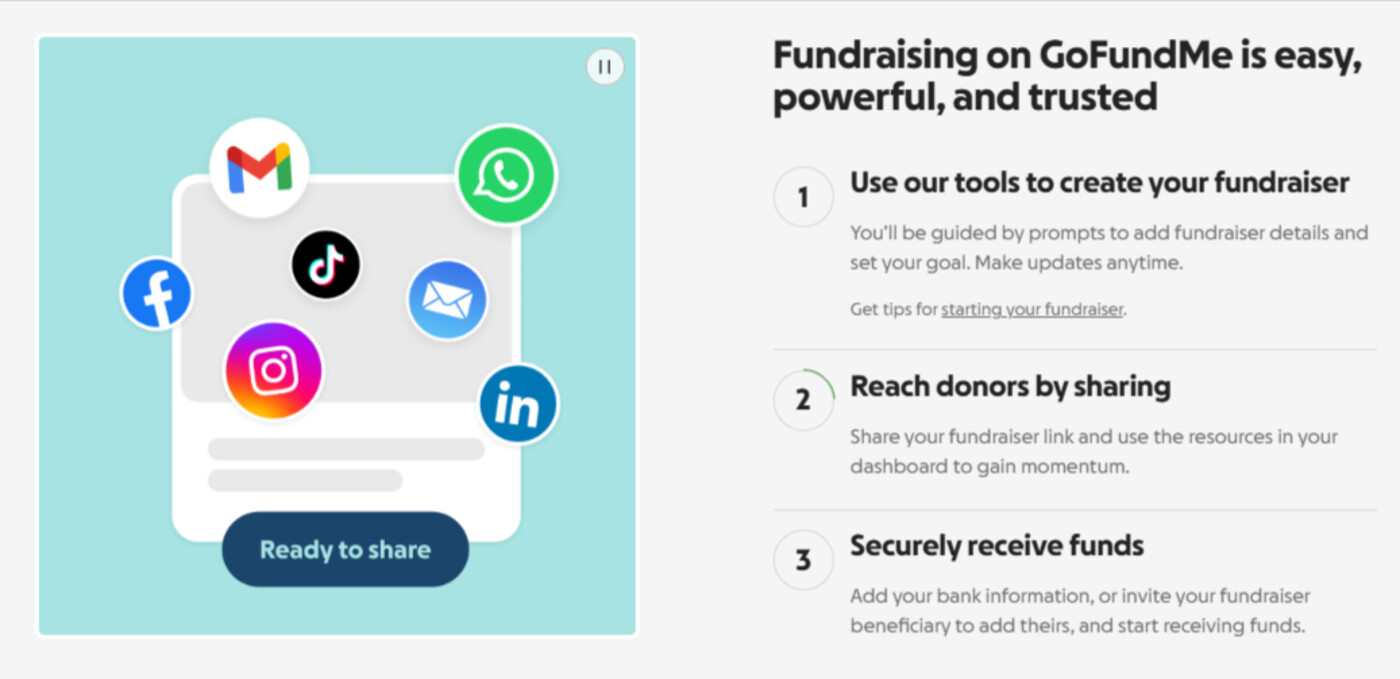
No single marketing channel reaches every potential donor. A resilient campaign combines owned channels, personal outreach, community distribution, earned media, and, where appropriate, paid promotion. The message should remain consistent, but the format should adapt to each platform.
| Channel | Best Use | Recommended Content |
|---|---|---|
| Direct message / phone | Early support and personal follow-up | Short personal request, reason for contacting the person, one clear action |
| Longer explanation, donor updates, partner outreach | Story, progress, impact, button or visible campaign link | |
| Facebook / Instagram | Community reach, visual storytelling, shares | Personal posts, Reels, photos, Stories, milestones, supporter posts |
| TikTok / YouTube Shorts | Human connection and broad discovery | 30–60 second direct-to-camera story, progress videos, beneficiary or volunteer voice |
| Professional networks, employers, CSR, alumni | Concise impact framing, project credibility, partnership or matching-gift request | |
| WhatsApp / SMS | High-attention personal and group outreach | Brief message, image, link, progress follow-up; avoid mass unsolicited spam |
| Communities / forums | Cause-aligned or local audiences | Context-first post, admin-approved link, transparent relationship to the cause |
| PR / media | Third-party credibility and public awareness | Timely local angle, verified facts, spokesperson, press-ready photos |
Personal outreach: the highest-priority channel
For most personal and community campaigns, the first donations come from people who already know the organizer or beneficiary. Send individual messages before relying on public posts. Mention the relationship, explain the need in one or two sentences, and give the recipient options.
Hi [Name], I'm reaching out personally because you know [me/the family/the organization]. We have created a fundraiser to help [beneficiary or cause] with [specific need]. The page explains the costs and how the funds will be used. A donation would help, but sharing it with someone who may care would also mean a lot: [link]. Thank you for reading it.
Email marketing: organize the campaign, don't send one blast and disappear
Email is valuable because it is direct, easy to personalize, and suited to longer explanations. Segment the list rather than sending identical language to everyone. A basic email sequence can include a launch email, a proof email, a milestone email, an urgency email, and an impact email.
Social media: change the angle, not the truth
Dedicated social posts should explain who the fundraiser is for, why the cause matters, how the funds will be used, and how people can donate or share. Useful angles include the origin story, the beneficiary story, a budget explanation, a progress update, impact proof, a supporter voice, behind-the-scenes content, urgency, and gratitude.
WhatsApp and SMS: use relevance and permission
WhatsApp is especially powerful in communities where group communication is normal, but mass-forwarded messages can quickly feel like spam. Ask group administrators before posting, and never add people to broadcast lists or groups without permission.
Community outreach: earn access before asking for attention
Relevant Facebook groups, Reddit communities, neighborhood platforms, alumni groups, professional associations, faith communities, and cause-specific forums can extend reach.
Partnerships, influencers, and PR
A trusted partner can provide reach and credibility — employers, local businesses, schools, religious organizations, medical associations, and community groups can match donations, sponsor costs, or share the campaign with members. Choose creators whose audience already cares about the issue rather than a celebrity with no relationship to the cause, and prepare a short media kit before pitching journalists.
Build a Repeatable Content and Update System
Fundraising momentum fades when the organizer goes silent. Updates are not administrative extras; they are new marketing assets. Each update gives donors a reason to return, supporters a fresh message to share, and new visitors proof that the campaign is active and accountable.
GoFundMe advises posting an update within seven days and continuing weekly or at important milestones. Create a simple content bank before launch:
- Three versions of the core story: 50 words, 150 words, and 400–600 words.
- A folder of approved photos and short videos.
- A one-page budget or use-of-funds summary.
- Quotes from the beneficiary, organizer, volunteers, partners, or experts.
- Five to ten social captions with different angles.
- A launch email, milestone email, urgency email, and thank-you email.
- A press summary and organizer biography.
- A list of real deadlines and campaign milestones.
Use Paid Promotion Carefully and Only After Warm-Traffic Validation
Paid advertising can increase reach, but donation campaigns often convert differently from ecommerce offers. A cold audience may sympathize with a cause and still choose not to donate because they have no personal connection, insufficient trust, or uncertainty about the organizer.
Before spending on ads, confirm that:
- The page receives donations or meaningful shares from people who already understand the cause.
- The story, cost breakdown, organizer identity, and call to action are clear.
- The campaign has credible visuals and recent updates.
- The target audience is definable by location, interest, community, condition, profession, or relationship to the issue.
- The organizer can afford the test budget without taking money needed for the beneficiary.
- The campaign has a tracking and reporting plan.
Start small, compare messages, pause weak ads quickly, and measure donations as well as lower-funnel signals such as campaign-page visits, time on page, shares, email sign-ups, messages, and partner inquiries. Never claim that paid promotion guarantees donations.
Turn Donors into Advocates Through Stewardship
A donor relationship should not end at the payment confirmation. Thanking supporters, reporting progress, and showing impact can generate repeat gifts, additional shares, introductions, volunteer help, and long-term trust.
- Send a personal thank-you as soon as reasonably possible.
- Acknowledge the donor's contribution without publicly revealing private information or donation amounts unless permitted.
- Explain what the support has enabled so far.
- Ask satisfied supporters to share a specific update rather than the original launch post.
- Provide a final report even if the campaign did not reach the full goal.
- Explain how excess funds will be used if the fundraiser raises more than expected.
Measure the Marketing Activities That Actually Move the Campaign
A campaign can appear busy while producing little progress. Measurement helps the organizer separate activity from effectiveness and identify the next best action.
| Metric | What It Reveals | How to Use It |
|---|---|---|
| Donation conversion rate | How well campaign-page visits turn into gifts | Improve page clarity, trust, audience fit, or call to action |
| Average donation | Typical gift size and audience capacity | Create realistic donor targets and giving examples |
| Share rate | Whether the story motivates advocacy | Improve share prompts and provide ready-to-use materials |
| Source or referral | Which channels bring valuable visitors or donors | Prioritize effective channels; reduce unproductive activity |
| Update response | Whether progress communications restart attention | Repeat successful formats and themes |
| Cost per donation / ROAS | Whether paid promotion is financially sustainable | Pause, retarget, or revise before scaling |
How to Restart a GoFundMe Campaign That Has Stalled
Most campaigns experience a slowdown after the initial announcement. A plateau does not always mean the cause has failed. It often means the original audience has already seen the same message and needs a new reason to act.
- 1Audit the pageRewrite the opening, clarify costs, add organizer details, and replace weak or unclear visuals.
- 2Publish a substantive updateExplain what has happened, what funds have achieved, and the next exact need.
- 3Create a smaller milestoneFocus on the next bill, supply purchase, treatment date, or project phase.
- 4Ask previous donors to shareGive them the new update with a specific message.
- 5Recruit new share-team membersFind five to ten from different networks.
- 6Re-contact interested supportersPeople who expressed support but may not have acted.
- 7Pitch a fresh media angleTie it to a milestone, event, or deadline.
Protect the Campaign with Ethical, Safe, and Compliant Marketing
Trust can take weeks to build and one misleading claim to destroy. Charity marketing should be persuasive without exaggerating facts, exploiting a beneficiary, or creating false urgency.
- Obtain consent from the beneficiary or authorized representative before publishing sensitive personal details.
- Remove unnecessary medical record numbers, addresses, bank information, and other private data from supporting documents.
- Use only images, videos, music, and testimonials you own or have permission to publish.
- Do not purchase fake donors, fake comments, fake shares, or fabricated endorsements.
- Do not promise tax deductions unless the fundraiser qualifies and the statement is accurate for the relevant jurisdiction.
- Keep records of donations, withdrawals, payments, and project spending.
- Avoid marketers who promise guaranteed donations or request access to banking or GoFundMe login details.
The U.S. Federal Trade Commission advises donors to research charities, verify contact details, and use trusted sources. This article provides general marketing information, not legal, tax, financial, medical, or regulatory advice.
Common GoFundMe Marketing Mistakes to Avoid
- Posting only the link: a link without context doesn't explain why the person should care or trust the campaign.
- Targeting everyone: broad outreach wastes attention — start with people who have a reason to care.
- Launching before the page is ready: early visitors may never return after seeing an incomplete story.
- Asking only for money: supporters can share, introduce, volunteer, match, or contribute services.
- Going silent after donations arrive: silence removes the campaign's strongest future content — progress.
- Using fake urgency: false deadlines undermine trust and can damage the organizer's reputation permanently.
- Ignoring mobile presentation: most social and messaging traffic arrives on mobile.
- No post-campaign report: donors deserve to know what happened, including when the full goal was not reached.
A Practical 30-Day GoFundMe Marketing Plan
| Period | Primary Actions | Main Objective |
|---|---|---|
| Before launch | Finalize page, evidence, approved visuals, donor segments, messages, email copy, share team, tracking, transfer setup | Make the campaign credible and operationally ready |
| Days 1–3 | Activate inner circle, publish main announcement, send launch email and WhatsApp messages | Secure early donations and social proof |
| Days 4–7 | Post thank-you and first progress update, begin community outreach, contact partners | Expand beyond the organizer's immediate audience |
| Days 8–14 | Share a budget explanation, follow up warm contacts, pitch local/niche media | Build credibility and reach new networks |
| Days 15–21 | Publish milestone update, seek a matching partner, test small paid promotion if validated | Restart attention and reduce mid-campaign slowdown |
| Days 22–27 | Focus on the next financial milestone, use partner/influencer content, re-engage donors | Create a second momentum wave |
| Days 28–30 | Use real deadline messaging, publish remaining-gap post, send final email, thank supporters | Finish strongly and preserve trust |
| After campaign | Report funds raised, fees, spending progress, and plans for remaining or excess funds | Close the accountability loop and retain supporters |
Conclusion: Sustainable GoFundMe Growth Comes from Trust, Relevance, and Consistency
The most effective GoFundMe marketing does not begin with advertising. It begins with a clear story, a defensible need, authentic visuals, a transparent use-of-funds plan, and a credible organizer. From there, the campaign should activate close supporters, map the audiences most likely to care, and distribute different versions of the story through personal outreach, email, social media, communities, partnerships, media, and carefully controlled paid promotion.
A successful donation campaign rarely depends on one viral moment. It grows through repeated acts of trust: a friend who shares a personal message, a donor who sees an honest update, a community leader who verifies the need, or an organization that matches contributions. Consistency turns these individual actions into momentum.