
A Kickstarter tabletop game campaign is not promoted the same way as a gadget, film, book, or charity fundraiser. A tabletop backer is buying a future play experience. Before pledging, that person wants to understand the theme, core loop, player count, play time, complexity, replayability, component quality, rule clarity, solo mode, expansion value, shipping cost, and whether the game has actually been tested by people outside the design team.
That makes tabletop promotion unusually proof-heavy. Attractive art earns the first click, but gameplay demonstration, independent previews, a clear rulebook, a believable production plan, and visible community response are what reduce uncertainty. Marketing has to do more than create awareness — it has to help a potential backer imagine the game on their own table and feel confident the creator can deliver it.
The opportunity is real: tabletop games reached an 80% success rate on Kickstarter in 2024, the highest in the platform's history for the category. That does not mean every game funds automatically — strong campaigns still show up with a tested product, a warmed audience, persuasive assets, realistic economics, and an organized launch plan. This guide walks through that full system, from game readiness through post-campaign growth.
Key Takeaways
- Promote the play experience, not merely the box — show what players do, feel, discuss, and discover during a session
- Begin audience building before the Kickstarter page goes live — pre-launch followers, email, community, reviewers, and past customers create launch-day momentum
- Playtesting is marketing research — it reveals the strongest audience, the clearest value proposition, and the moments worth featuring in creative assets
- Build proof before scale: a near-final prototype, rulebook, gameplay footage, preview coverage, component photography, and a shipping explanation
- Use communities as communities — contribute first, follow the rules, disclose your relationship to the project, and avoid repetitive promotional drops
- Match each channel to a job: reviewers build credibility, email converts warm leads, ads expand and retarget, and newsletters reach crowdfunding backers directly
- Keep reward tiers easy to compare — excessive add-ons and unsustainable stretch goals reduce conversion and create fulfillment risk
- Measure pledges and contribution margin by source, not just clicks, followers, or impressions
Why Tabletop Campaigns Need a Category-Specific Strategy
Tabletop projects share the general crowdfunding challenge of selling something that doesn't yet exist at retail scale, but the buying decision carries several category-specific questions. A person may love the art and still hesitate because the rules feel unclear. A hobby gamer may admire the mechanics but worry about player count. A family buyer may like the theme but fear it's too complex. A miniatures backer may love the sculpts but worry about production and shipping. A TTRPG backer may care more about system compatibility and actual-play proof than physical components.
| Category | What Backers Need to Understand | Best Promotional Proof |
|---|---|---|
| Strategy board game | Core loop, meaningful choices, player interaction, replayability | Rules overview, edited playthrough, reviewer preview |
| Card or party game | Immediate hook, pace, group energy, portability | Short reaction-led video, 30-second rules explanation |
| TTRPG or sourcebook | Setting, system, campaign utility, writing quality | Sample pages, quickstart rules, actual play, GM tools |
| Miniatures / skirmish Proof-heavy | Sculpt quality, scale, faction identity, fulfillment feasibility | Macro photography, painted samples, manufacturing proof |
| Solo / puzzle / narrative | Progression, discovery, difficulty, spoiler-safe explanation | Guided demo, unboxing, non-spoiler review |
The strategic consequence is simple: generic "back our game" marketing is weak. Promotion has to identify the precise player profile and show the evidence that matters to that profile. One campaign may win through strategic credibility and reviewer coverage; another may win because a fifteen-second video makes the party experience instantly understandable. The channel mix follows the game's actual buying logic. Kickstarter's own tabletop marketing guide makes a similar point — concept refinement and audience-matched playtesting come before any channel decision, not after.
"The strongest tabletop campaign creative makes a viewer say, 'I know who I would play this with,' not merely, 'That box looks attractive.'"
Start with a Game People Can Understand and Recommend
Promotion cannot permanently compensate for an unclear or under-tested game. Before scaling traffic, make sure the project has moved beyond the private enthusiasm of the design team and has been tested with the audiences it intends to serve. Kickstarter's own guide to playtesting before you launch puts it bluntly: launching an underdeveloped game is arguably worse than not launching at all, since backers talk and BoardGameGeek threads are forever.
Five ways to pressure-test the game before you market it
- Blind playtesting: give the rules and prototype to players without teaching them directly, to expose unclear language and onboarding problems
- Audience-fit testing: test with the actual buyer group — heavy gamers, families, couples, solo players, educators, or TTRPG groups
- Repeated-session testing: one enjoyable session doesn't prove replayability; watch how decisions and excitement hold across multiple plays
- Production-reality testing: confirm component counts, card sizes, boards, and packaging remain manufacturable at the intended pledge price
- Messaging testing: ask playtesters how they'd describe the game to a friend — their language often reveals a clearer hook than the designer's own
A game is promotion-ready when strangers can learn it, finish it, describe why it's different, and identify who should play it — without the designer rescuing the experience.
Define the Audience and Positioning Before Choosing Channels
The tabletop audience isn't one homogeneous market. "People who like games" is too broad for useful messaging or paid targeting. Build a primary audience definition around behavior, not only age or location — experience level, primary motivation, comparable experiences, use occasion, and the main objection standing between a visitor and a pledge.
Positioning should fit in one sentence: "[Game] is a [category and experience] for [specific player] who wants [distinct outcome], unlike [common alternative], because [credible differentiator]." The exercise forces the creator to decide what actually deserves attention. A campaign can have secondary audiences, but the first screen and first ads shouldn't try to speak to everyone equally.
Build the Pre-Launch Funnel
A tabletop Kickstarter is usually won or lost before launch day. Pre-launch gives the creator time to identify demand, collect permission-based contacts, test creative, build trust, prepare reviewers, and estimate whether the funding goal is realistic.
| Funnel Stage | Audience Action | Creator Objective |
|---|---|---|
| Awareness | Sees art, gameplay moment, or reviewer mention | Earn qualified attention |
| Interest | Visits a landing page or Kickstarter pre-launch page | Explain fit and value |
| Consideration | Watches a playthrough, reads rules, joins Discord | Reduce uncertainty |
| Commitment signal Warmest | Follows Kickstarter, joins email list, attends a demo | Identify warmer prospects |
| Launch conversion | Pledges during the first hours or days | Create funding momentum and proof |
| Advocacy | Shares, comments, upgrades, brings a playgroup | Expand trusted reach |
Choose the right pre-launch destinations
- A Kickstarter pre-launch page for platform followers and automatic launch notifications
- An owned landing page for email capture, deeper explanation, and permission-based nurture
- A Discord server or community group when ongoing conversation is genuinely useful to the game
- Convention or local demo sign-ups for players who experienced the game in person
- An optional reservation funnel — only when the offer is transparent, accurately priced, and refundable where promised
Prepare the Content and Proof Assets
Tabletop promotion works best when every channel draws from a shared asset library, built early so the team isn't improvising weak visuals during the live campaign: a hero image, campaign trailer, how-to-play video, edited playthrough, rulebook or quickstart, component photography, review quotes, a reward comparison graphic, a shipping and timeline graphic, and social cut-downs.
Show real gameplay as early as possible. Beautiful cinematic art can create interest, but tabletop backers often want to see hands, turns, cards, boards, dice, or player reactions. For pre-production visuals, clearly distinguish final prototypes, samples, digital renders, and work-in-progress components — trust is more valuable than temporary polish.
"Every promotional asset should answer at least one of four questions: What do players do? Why is it fun? Why is this version special? Why should I trust this creator?"
Use Kickstarter's Pre-Launch Tools Properly
Kickstarter's pre-launch page gives potential backers a direct "Notify me on launch" action, and creators can publish pre-launch updates that are visible on the page and emailed to current followers. Choose a project image that stays readable at thumbnail size, write a concise description with player count and play time up front, publish meaningful updates such as a reviewer reveal or final prototype photos, and drive all external traffic to the final Kickstarter URL once it's generated, so the same link redirects to the live project after launch.
Build Communities Without Spamming Them
Tabletop games are social products, and community can become the most durable promotional advantage. The mistake is treating every community as a free advertising board. Reddit, BoardGameGeek, Discord, Facebook groups, local clubs, game stores, conventions, and TTRPG communities each have their own norms — a promotional post that ignores those norms can damage a creator's reputation before the campaign even begins.
Community-first operating rules
- Join early enough to understand the culture and self-promotion rules
- Contribute useful material unrelated to your campaign before asking for attention
- Disclose that you're the creator whenever discussing the game
- Ask moderators before arranging an AMA, giveaway, or promotional event
- Use one canonical thread rather than reposting the same pitch repeatedly
- Respond to criticism calmly — a thoughtful answer builds more trust than deleting or arguing with every negative comment
Reviewer, Influencer, and Actual-Play Outreach
Independent coverage introduces the game to a relevant audience and reduces perceived risk. For tabletop campaigns, fit matters more than raw follower count — a small reviewer whose audience consistently backs medium-weight strategy games can be more valuable than a broad entertainment account.
Build the outreach list by game type and complexity, format (written preview, unboxing, actual play, podcast), audience behavior, lead time, and each creator's editorial policy. Research category-fit creators months before launch, approach once a representative prototype and press kit are ready, and confirm publication dates two to four weeks out where schedules allow. Stonemaier Games founder Jamey Stegmaier — whose lessons on connecting with bloggers are one of the most cited references in the hobby — found that most backers discovered his campaigns through Kickstarter or BoardGameGeek directly, but blog coverage was what turned lookers into backers once they arrived.
Never buy a positive review, write a reviewer's opinion for them, hide compensation, or suppress honest criticism. The FTC's Endorsement Guides require truthful endorsements and clear disclosure of any material connection — a paid preview, a free prototype, or an affiliate arrangement.
Create a Campaign Page That Converts Tabletop Backers
Every channel eventually sends people to the project page, and it has to convert visitors at very different awareness levels — an email subscriber may already know the game, while a Kickstarter browser may have only a thumbnail and title. Build the page so a visitor understands the project quickly, then can go deeper without confusion: hero and opening, gameplay loop, why it's different, video proof, components and content, independent proof, rewards, shipping and delivery, and creator and fulfillment credibility.
Make the opening screen do real work
- Name the game type — a visitor shouldn't need to decode the theme before learning whether it's a board game, card game, TTRPG, or miniatures project
- Show player count and expected play time prominently
- State the distinctive experience in plain language — negotiation, tactical combat, cooperative deduction, or another meaningful hook
- Use one primary call to action; don't bury reward selection beneath long lore
- Design for mobile — large image-based text and dense reward graphics can become unreadable on phones
A campaign page isn't the full rulebook, but it should reveal the core loop, objective, turn structure, and the decisions that make play interesting. Link the current rulebook or quickstart for serious evaluation, and label it clearly as a draft when appropriate.
Design Rewards, Add-Ons, and Stretch Goals Carefully
Tabletop campaigns get complicated fast because physical components, expansions, deluxe upgrades, miniatures, retailer bundles, and shipping choices create many possible combinations. Every additional option can increase average pledge, but it also adds production, customer-service, and fulfillment complexity.
| Tier | Role | Risk |
|---|---|---|
| Support / digital | Low-friction participation | Too many low tiers can distract from the core game |
| Core game Primary tier | Primary conversion tier | Weak presentation lowers the entire campaign's conversion |
| Deluxe / collector | Higher-value physical upgrade | Cosmetic complexity can damage margins and delivery |
| All-in | Convenience for high-intent backers | Can feel inflated if packed with low-value extras |
| Add-ons | Optional expansion or accessory | Too many increase decision fatigue and packing errors |
Stretch goals should improve the project without turning the campaign into a promise machine. Every stretch goal needs a cost model, manufacturing implication, packaging impact, shipping impact, and quality-control plan — avoid goals that force a redesign after funding or add components just because competitors do.
Launch-Day and First 48-Hour Plan
Launch day should be a coordinated conversion event, not the first time the audience hears about the game. The objective is to convert the warmest supporters first, answer questions quickly, and create visible proof that makes later visitors more comfortable.
-
124 hours before: final auditTest the mobile page, the pledge flow, and confirm email, reviewer, and ad readiness.
-
2Launch minute: publish and verifyConfirm the project is live, test the pledge flow again, and send the warmest launch message.
-
3First hour: activate owned channelsEmail your high-intent list, notify Discord and owned communities, and post the creator announcement.
-
4Hours 2–12: activate partnersBring in planned reviewers, retargeting, and high-confidence ads, and clarify any recurring FAQ questions quickly.
-
5Day 2: reach the wider listSend a second message to non-openers, share a milestone, and adjust any weak creative.
"Don't send every audience the same message. The closer the relationship, the more direct the call to pledge can be."
Paid Advertising for Tabletop Games
Paid advertising can validate positioning, build a pre-launch audience, retarget interested visitors, and acquire live-campaign backers — but it shouldn't be used to conceal weak demand or an unclear campaign page. Pre-launch ads test the theme, art direction, and strongest gameplay moment while building permission-based leads; live-campaign ads convert the warm pre-launch audience, scale proven creative, and promote independent coverage.
Clicks aren't the goal. Track the path from impression to landing-page view, pre-launch action, Kickstarter visit, pledge, average pledge, and contribution margin. A high click-through rate can still produce zero backers if the ad attracts curiosity rather than player fit, or if shipping creates sticker shock once someone reaches the page. Agencies that specialize in this, like LaunchBoom's board game marketing program, build their entire pre-launch ad strategy around this same funnel logic — proving demand with cheap traffic before a single dollar is spent trying to acquire a backer directly.
Crowdfunding Newsletter Promotion
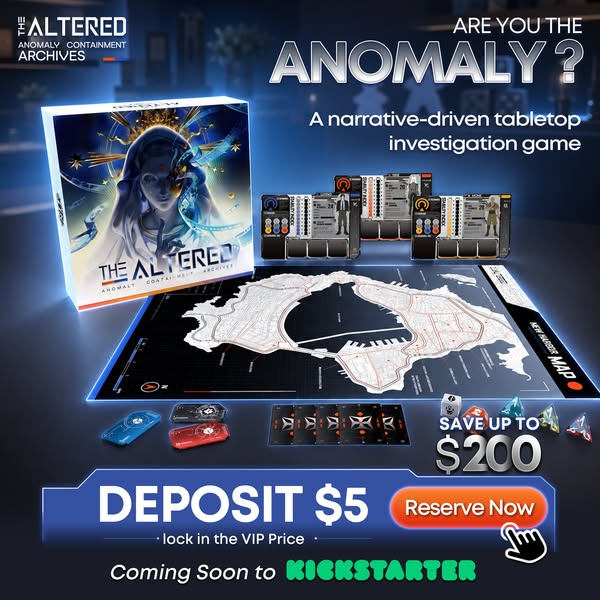
Crowdfunding newsletters introduce a live tabletop project to people who already subscribe to discover Kickstarter and other crowdfunding campaigns — a different role from broad social advertising, since the audience already understands pledge mechanics and campaign deadlines. Choose timing intentionally (launch support, mid-campaign proof, final-week urgency), provide a tagged link, a clear hook, and the strongest proof, and judge results by pledges and revenue rather than open rate alone.
Pledgewire by Boostfunders groups campaigns by audience category, including tabletop, TTRPG, card, and video game backers, with placements ranging from a shared feature to a fully dedicated send. Our Kickstarter newsletter promotion guide covers exactly what to expect from each placement type.
Organic Social Content and Creator-Led Storytelling
Organic promotion should make the development journey interesting even before the campaign asks for money. Tabletop games naturally produce visual, educational, and community-driven content — gameplay clips, design-process breakdowns, world and theme content, proof from blind playtests or conventions, and community polls or naming votes. Format the same idea differently for short-form video, YouTube, Instagram and TikTok, and Discord, and build a repeatable weekly rhythm the team can maintain through production.
Cross-Promotions, Retailers, Conventions, and Partnerships
Tabletop creators often share adjacent audiences, and a cross-promotion can work well when the projects are compatible but not direct substitutes. Retailers can provide demos, local credibility, and multi-copy pledges, but any retailer offer should reflect real wholesale economics and region limits. At conventions, schedule demos with a clear objective, use a short teaching script, and collect consent properly before treating a badge scan as unrestricted marketing permission.
Live-Campaign Management and the Mid-Campaign Slowdown
Many campaigns open strongly, slow after the first burst, and rise again near the deadline. The middle period shouldn't be treated as dead time — it's the best window to publish deeper proof, answer objections, reactivate warm audiences, and test improvements before final-week urgency.
| Signal | Likely Issue | First Response |
|---|---|---|
| Traffic falls, conversion stays healthy | Awareness and distribution problem | Activate partners, reviewers, and newsletters |
| Traffic holds, pledge rate falls | Page, offer, or trust problem | Audit opening, gameplay clarity, rewards, and shipping |
| Many followers, weak launch conversion | Low-intent audience or poor nurture | Segment, answer objections, show proof |
| Questions repeat in comments | Critical information is buried or missing | Update the page FAQ and post a public clarification |
Useful mid-campaign content includes a meaningful gameplay reveal, an independent preview or actual-play episode, a production sample or manufacturer update, a transparent milestone explanation, or a community event such as a livestream or AMA — anything that adds new proof rather than repeating a countdown post.
Shipping, Fulfillment, and Trust
Tabletop games are physical, often heavy, and frequently international, and shipping uncertainty can erase the excitement created by marketing. Obtain manufacturing and fulfillment estimates before finalizing the funding goal, model carton size and weight for every tier, explain exactly how and when shipping is charged, and account for VAT, duties, and remote-area restrictions.
A backer should be able to understand not only what the game costs, but what will happen between pledge and delivery. Clarity on production and shipping is part of conversion copy, not an administrative appendix.
Measurement and Attribution
A tabletop campaign generates enthusiasm across many touchpoints before a pledge is recorded, so combine direct attribution with audience and conversion evidence — pre-launch conversion, launch conversion, average pledge, cost per backer, referral-tag revenue, and reward mix. Don't compare ad cost with gross pledge alone; subtract fees, taxes, manufacturing, freight, and fulfillment to see the contribution that actually funds more acquisition.
Kickstarter allows custom referral tags that report pledges and funding share by tagged source. Set one up for every major channel before launch — email, ads, each reviewer, each community, and each newsletter placement — so mid-campaign decisions are based on real numbers rather than guesswork.
A 90-Day Promotion Calendar
The following framework assumes the game and prototype are sufficiently advanced. Complex games, miniatures, licensed projects, or campaigns requiring many physical review copies may need a longer runway.
| Period | Primary Objective | Actions and Deliverables |
|---|---|---|
| Days 90–76 | Positioning and readiness | Confirm audience, playtest gaps, hook, and funding economics |
| Days 75–61 | Asset and reviewer preparation | Finalize press kit, rulebook draft, teaching video, and reviewer list |
| Days 60–46 | Community and content foundation | Strengthen owned community, publish design content, schedule demos |
| Days 45–31 | Demand testing | Test hooks and creative, collect leads, gather objections |
| Days 30–15 | Proof and launch coordination | Confirm reviewer dates, newsletter slots, referral tags, and ads |
| Days 14–8 | Pre-launch conversion | Publish pre-launch updates, intensify follower drive |
| Days 7–1 | Operational rehearsal | Complete page audit, link checks, and team role assignments |
| Launch days 1–2 Critical | Warm conversion and proof | Email, communities, reviewers, retargeting, and rapid support |
| Live days 3–21 | Sustain relevance | Updates, deeper gameplay, community events, reviewer waves |
| Final 7 days | Deadline conversion | Segmented email, saved-interest reminders, backer referrals |
| After close | Continuity and delivery | Thank backers, confirm milestones, plan pledge management |
Common Tabletop Kickstarter Promotion Mistakes
- Launching because the page is complete even though the audience isn't ready
- Leading with lore or cinematic art before explaining the game and player experience
- Using only friends and the design team for playtesting
- Sending reviewers prototypes too late for meaningful play and production
- Choosing influencers by follower count rather than audience fit
- Posting repeatedly in communities without contributing first
- Creating too many reward tiers or component variants
- Hiding shipping costs or using unrealistically low estimates
- Publishing only funding requests during the live campaign instead of new proof
- Ignoring the post-campaign plan until the funding deadline closes
Post-Campaign and Late-Pledge Growth
A funded Kickstarter is the beginning of a delivery relationship. Publish a prompt closing update, set a reliable update rhythm tied to real production events, use the pledge manager to collect final selections, and enable Late Pledges when it fits the campaign. Continue demonstrating progress through files approved, samples, tooling, and freight, and use completed fulfillment and customer trust as proof for the next game or expansion.
How Boostfunders Helps Tabletop Creators
Boostfunders supports Kickstarter tabletop campaigns through strategy, paid advertising, social and community outreach, email, PR, influencer outreach, newsletter promotion, live-campaign support, and post-campaign growth. The right mix depends on the game's readiness, audience, budget, campaign stage, and conversion economics — for a broader breakdown of what full-service support actually includes, see our guide on what a Kickstarter marketing agency actually does.
Conclusion
Promoting a Kickstarter tabletop game campaign isn't one launch announcement followed by repeated countdown posts — it's a sequence of trust-building decisions. The creator first proves the game works, defines who it's for, builds a community and pre-launch audience, prepares independent and gameplay proof, designs clear rewards, and models production and shipping. Only then do paid ads, reviewers, newsletters, social content, conventions, and Kickstarter discovery have a strong foundation to build on.
No promotion method guarantees funding. A coordinated system gives the project the best chance to reach the right players, learn from real demand, convert attention responsibly, and preserve a community that can support fulfillment, retail, expansions, and future campaigns.
Planning a tabletop game launch or trying to grow a live Kickstarter campaign? If you'd like your campaign reviewed and put in front of active tabletop backers through our curated newsletter, submit your campaign here — we review every submission within 2 hours.