Kickstarter, BackerKit, and Gamefound can each support a strong crowdfunding launch. The right choice depends on who will back your project, how you will reach them, and what happens between the first pledge and the final delivery.
Key Takeaways
- Shortlist Kickstarter for a broad creative launch. It is a useful starting point for design, technology, publishing, film, and games, subject to its project rules
- Shortlist BackerKit for a launch built around an active fan community. Its integrated marketing, collaboration, and pledge management tools deserve attention from RPG, art, and collectible creators
- Shortlist Gamefound for tabletop and related projects. Its gaming focus and configurable payment and order workflows can suit complicated reward catalogs
- Compare the entire funding cycle. Campaign fees, later transactions, installment collections, marketing, and fulfillment all affect how much usable cash remains
- Build evidence of demand before choosing a launch date. Platform discovery can help, but your funding plan should not depend on an unpromised feature or recommendation
1. The Quick Platform Comparison
Our recommendations below are editorial judgments based on the platforms' current rules and features. They are starting points for a shortlist, rather than predictions about how much a particular campaign will raise.
| Platform | Strong Reason to Shortlist It | Main Question to Resolve |
|---|---|---|
| Kickstarter | Broad creative categories and a campaign experience that can serve several audience types | Can your specific audience be reached and converted at a sustainable cost? |
| BackerKit | Connected crowdfunding, email marketing, collaboration, and pledge management | Will your community use the engagement tools, and does the required pledge manager fit? |
| Gamefound | Gaming focus, detailed reward workflows, and flexible installment settings | Does your project qualify, and can your team manage the catalog and cash schedule? |
Avoid choosing from a platform's biggest campaign. An established publisher with several delivered products, a substantial mailing list, and international distribution has different advantages from a first-time creator. A better comparison is a recent project with a similar price, category, audience, production burden, and creator history.
2. Check Eligibility and the Funding Model First
These are reward crowdfunding options: supporters back a creative project and may select products, digital content, or other rewards. This comparison concerns launching and delivering those projects, rather than selling startup shares.
For Kickstarter and BackerKit's standard campaigns, reaching the funding goal determines whether campaign funding is collected. Gamefound's regular crowdfunding also depends on a funding goal. Set that goal from the minimum viable production and delivery plan, allowing for fees and the costs the campaign must cover.
Gamefound also has a separate Express Crowdfunding mode. Its official guide describes checkout payments, shipping and address collection at checkout, and payouts during the campaign after verification. It is intended for suitable projects with products ready or close to fulfillment that do not need a funding goal to deliver. Do not apply the regular campaign's payment assumptions to this mode.
Confirm That You Can Actually Launch
Backer access and creator eligibility are different. An audience may be international even when the person or business collecting funds must qualify in a supported country.
- Kickstarter — Review its creator eligibility requirements, including the individual or entity, verification documents, and supported bank account
- BackerKit — Check its supported countries, identification requirements, and ability to establish the necessary Stripe account
- Gamefound — Read who can run a campaign. Its rules cover accepted countries, project suitability, and previous fulfillment history; acceptance remains subject to review
Complete this check before paying for campaign assets or announcing a firm date. A project page set in a particular city does not, by itself, establish that the underlying creator qualifies there.
3. Kickstarter: When Broad Creative Scope Helps
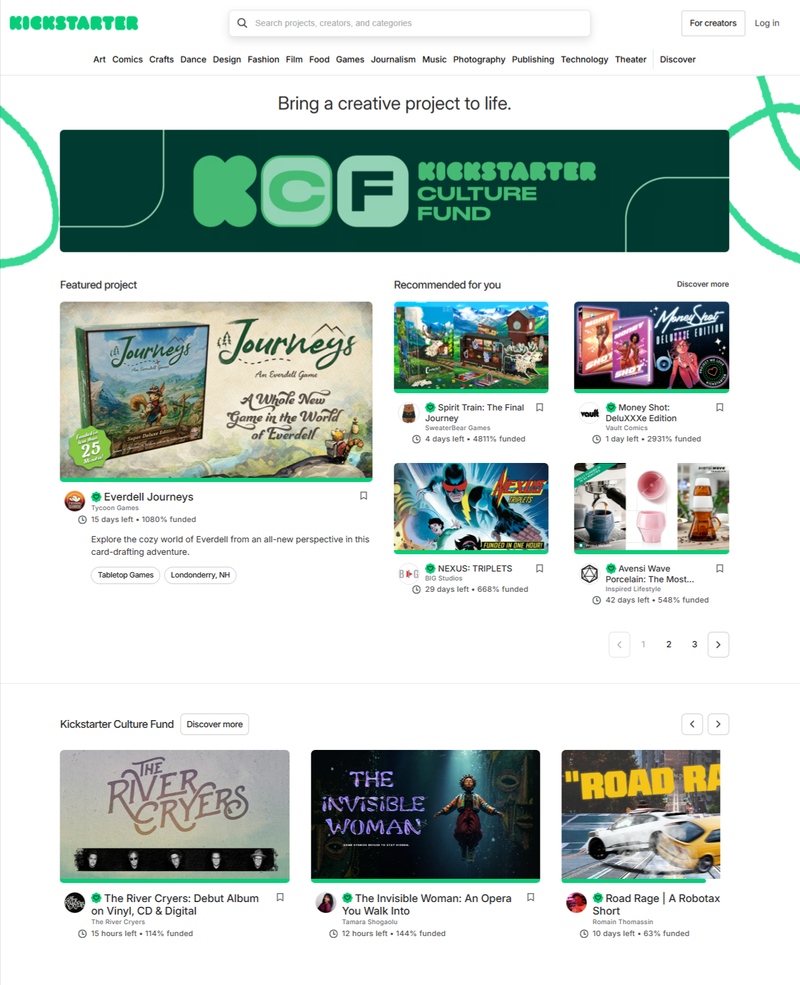
Kickstarter's rules cover categories including games, design, technology, comics, publishing, music, and film. That breadth makes it worth assessing when your project could appeal to several kinds of supporters, such as a practical design product with an enthusiast audience or an illustrated book connected to an existing creative practice.
Our recommendation is to begin here for many consumer design and technology projects, then validate the choice with comparable campaigns and audience research. Category availability alone does not prove that strangers will understand your product or accept its proposed price.
What Creators Should Prepare
Explain the project in a way someone outside your immediate community can understand. Show what exists, how it works, what the reward includes, and why crowdfunding is necessary. Technical features need a clear connection to the problem the product solves.
For design and technology projects, Kickstarter's presentation rules require prototype demonstrations to reflect the current product; simulated functionality must not create a misleading impression. A polished video cannot compensate for uncertainty about whether the demonstrated features work.
What Has Changed in Platform Comparisons
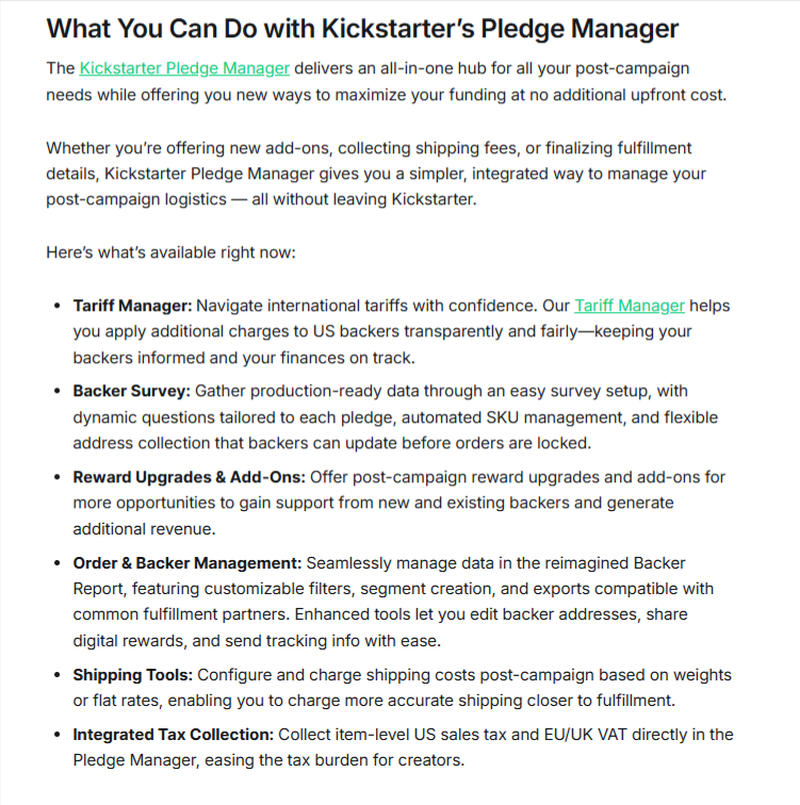
Kickstarter now has native pledge management as well as Late Pledges. Its Pledge Manager documentation describes address collection, reward preferences, taxes, shipping payments, and configured upgrades or add-ons. Evaluate those capabilities against your actual order requirements.
For a broader introduction to the campaign experience, see Boostfunders' guide to how Kickstarter works. The practical task is to connect the product story, reward pricing, audience plan, and post-campaign setup before launch.
4. BackerKit: When Community and Collaboration Matter
BackerKit operates its own crowdfunding platform and also provides pledge management for projects funded elsewhere. Those are different purchasing decisions with different pricing. Using BackerKit after a Kickstarter campaign does not mean the campaign was launched on BackerKit.
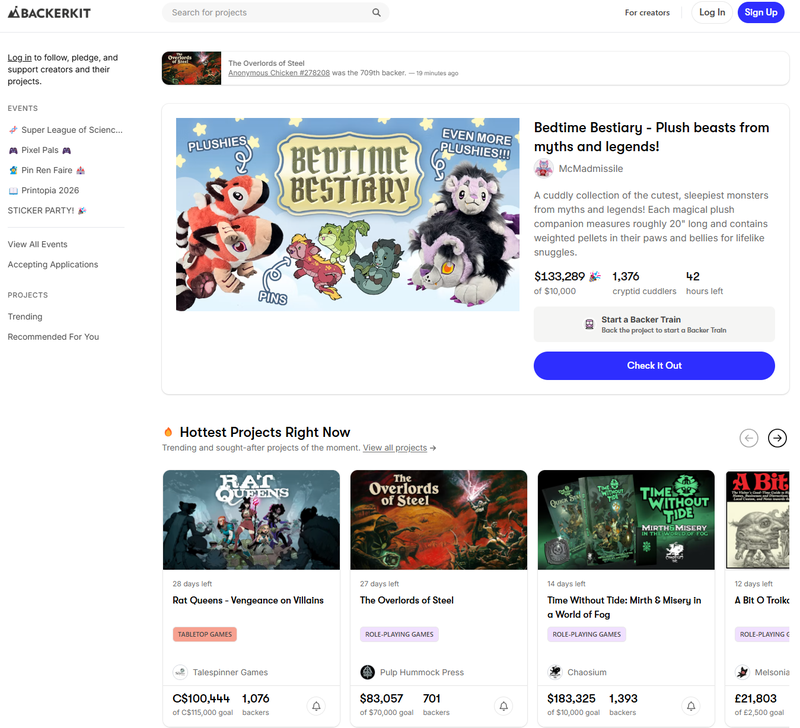
The platform's current project listings include tabletop and role-playing games, enamel pins, plushies, and art. Its crowdfunding rules also welcome a wider range of projects, including gadgets, comics, crafts, and experiences. Treat our focus on fandom and collectibles as a recommendation, not a restriction on everything else.
Why Collaboration Can Influence the Decision
BackerKit's Cross-Collab feature connects two separate BackerKit campaigns around an incentive for supporters who back both, provided both campaigns fund. Each project keeps its own concept and funding goal.
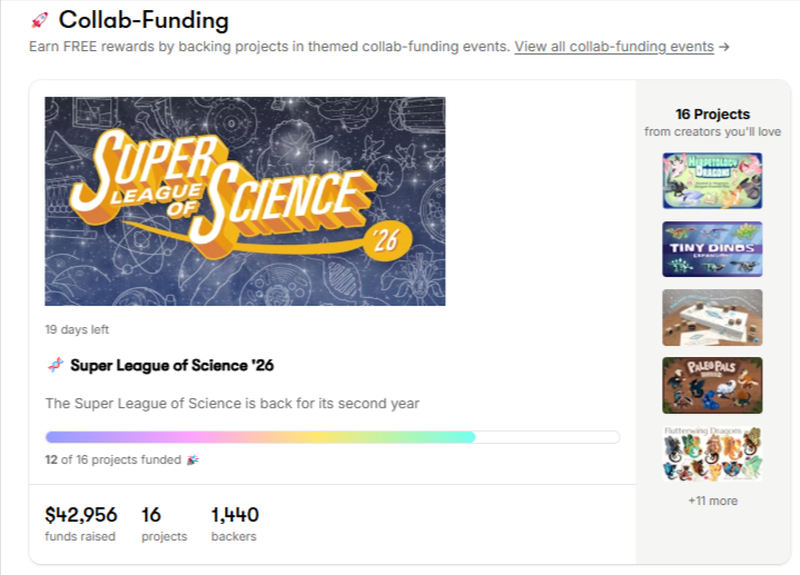
That can make sense for two creators whose audiences already share an interest. For example, an RPG publisher and a compatible adventure creator could plan a useful digital bonus. The practical value comes from audience overlap, a credible partner, and an incentive you can afford to deliver. Simply attaching another campaign does not create those conditions.
BackerKit also offers integrated email marketing and campaign engagement features. These are more useful when someone on your team can maintain the content calendar and respond to the community throughout the campaign.
The Workflow Commitment to Notice
BackerKit's crowdfunding rules require creators to survey backers through its pledge manager after the campaign. If your launch depends on another order system, validate the export and fulfillment process before committing. Also review its restrictions on duplicate projects and its current policy on generative AI content where relevant to your creative work.
5. Gamefound: When Tabletop Depth Matters
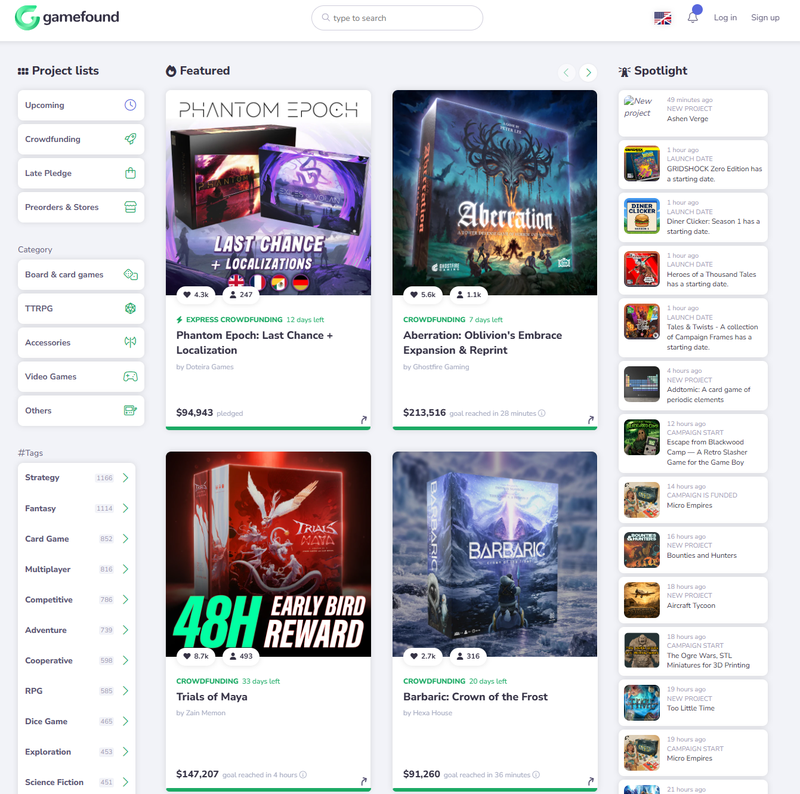
Gamefound is a strong candidate for a board game, tabletop RPG, miniature collection, or gaming accessory. Its eligible-project guidance also includes books, comics, and certain gaming or geek-related media, apparel, and gadgets. A project outside those areas should obtain a suitability decision before building its launch around the platform.
A Useful Match for Complicated Rewards
Consider a game with a base edition, deluxe components, optional miniatures, language variants, and several shipping regions. The platform decision now affects how backers configure orders and how the creator turns those selections into an accurate production file.
Gamefound's creator setup guide covers rewards, add-ons, stock limits, stretch goals, follower gifts, shipping settings, and testing. Those connected tools are a reason to evaluate it seriously for a detailed tabletop campaign.
The corresponding responsibility is catalog discipline. Every option should have an identifiable product code, a cost, a production quantity, and a fulfillment rule. Adding another expansion may raise the average pledge while also increasing freight, support work, and the chance of packing mistakes.
Who Should Be Cautious About the Fit?
A first-time game creator should still compare all three platforms. Gamefound's specialization does not replace playtesting, a readable rulebook, manufacturing quotations, or a credible delivery plan. An established publisher may value its operational depth more immediately than a creator producing a small, simple card game.
Gamefound also reviews previous project delivery. Its guidance generally expects a prior project to be fully delivered before the next campaign, with exceptions assessed individually. Plan your release calendar around the applicable decision.
6. Compare Fees Across the Full Funding Cycle
All three advertise a 5% crowdfunding platform fee, with payment processing additional. That headline is only the starting point. Country, currency, transaction size, later payments, and optional services can change the actual total.
| Platform | Published Crowdfunding Platform Fee | Published Payment Processing Basis |
|---|---|---|
| Kickstarter | 5% of collected funds for a successfully funded project | Roughly 3–5%; check the applicable country schedule |
| BackerKit | 5% of total funds raised when the project reaches its goal | U.S. rate: 2.9% + $0.30 per pledge. Other countries differ |
| Gamefound | 5% of successfully collected funds | 3% + $0.20 per transaction in the project currency; $0.20 for USD |
Sources: Kickstarter fees, BackerKit pricing, and Gamefound fees. Checked September 9, 2026.
A $100,000 Example
Assume $100,000 is successfully collected through 1,000 single payments of $100. Use USD and BackerKit's published U.S. processing rate. Exclude taxes, shipping collected later, currency conversion, failed payments, refunds, installments, and optional services.
- BackerKit — $5,000 platform fee + $2,900 percentage processing + $300 fixed processing = $8,200. Remaining before other costs: $91,800
- Gamefound — $5,000 platform fee + $3,000 percentage processing + $200 fixed processing = $8,200. Remaining before other costs: $91,800
- Kickstarter — Applying its general 3–5% processing estimate produces approximately $8,000–$10,000 in combined fees. Remaining before other costs: approximately $90,000–$92,000. Use its actual country schedule for the final budget
Illustrative calculations based on the published rates above. These are campaign-stage estimates, not quotations or profit forecasts.
BackerKit and Gamefound happen to produce the same result in this example. Change the average payment or transaction count and that may change. A small processing difference is usually less consequential than a poorly priced reward or an expensive acquisition channel.
What Happens After the Campaign?
Kickstarter's native Pledge Manager: New payments attract the published platform and processing fees. Kickstarter excludes taxes from its 5% platform-fee base, while processing applies to the full payment, including taxes.
BackerKit after a BackerKit launch: The separate pledge-manager Campaign Fee is waived, but its pricing lists a 5% Transaction Fee for post-campaign funds, plus payment processing. Included pledge management does not mean later payments are free.
BackerKit after another platform: Its standalone pledge-manager pricing lists a Campaign Fee of 2% or less, calculated using funding bands and backer-related rules, plus a 3.5% Transaction Fee on additional funds. Payment processing is additional. These costs sit alongside the original platform's campaign fees.
Gamefound pledge management: Its fee guide states that managing existing pledges has no separate management charge; newly collected payments attract 5% plus the stated processing fee. Confirm the full setup for an imported campaign.
Ask each provider to price the same scenario: original campaign funds, expected upgrades, shipping collections, taxes, late backers, and number of charges. Keep advertising, agency services, manufacturing, freight, packing, and a contingency reserve in separate budget lines.
7. Installments: Compare Cash Timing as Well as Conversion
Installments can make a higher-priced reward more accessible. They also mean the amount displayed as pledged may take time to become usable cash. All three platforms offer an installment option, but their configurations differ.
Kickstarter: Pledge Over Time
Kickstarter's Pledge Over Time FAQ describes three equal payments for eligible pledges when enabled. The current USD minimum is $125. For new campaigns, later installments are paid out separately, approximately eight and twelve weeks after the campaign ends. The feature is currently unavailable for Late Pledges, and backers must complete payment before accessing the pledge manager.
BackerKit: Pay Over Time
BackerKit's Pay Over Time FAQ describes four monthly installments for eligible pledges of $150 or more before shipping and tax, when the creator enables the option. It is selected during the live campaign and is currently unavailable in its pledge manager or preorder/late-pledge store. Survey access follows completion of payment.
Gamefound: Stretch Pay
Gamefound's Stretch Pay guidance lets creators configure a minimum payment and between two and ten installments. Availability can extend into late pledging and pledge management, subject to settings and the payoff deadline. Each installment is a separate transaction, so fixed processing charges need to be modeled accordingly.
If $30,000 of a hypothetical raise is spread over three equal payments, only $10,000 belongs to the first collection, before fees and payout timing. A factory requiring a deposit immediately after the campaign cannot be paid with the later $20,000 yet.
Model supplier deposits, final balances, freight payments, refunds, and a slower collection scenario by date. Choose an installment schedule that supports delivery. A higher average pledge is useful only if the resulting cash schedule remains workable.
8. Pre-Launch Marketing and Platform Discovery
The most useful audience question is specific: Where do people who buy products like yours already discover, discuss, and back projects? Ask existing customers, playtesters, readers, and subscribers which platforms they use, then compare their answers with recent campaigns.
Build a small comparison sheet containing category, reward price, funding goal, backer count, creator history, offer structure, and fulfillment status. Include modest launches and unsuccessful projects. Looking only at heavily promoted winners creates an unrealistic picture of what the platform itself contributes.
Match the Launch Plan to the Platform
- Kickstarter — Use the pre-launch page alongside a clear product demonstration and outreach to the communities most likely to understand the reward
- BackerKit — Plan whether email, collaborative incentives, and community events have a real role in the launch. Assign someone to run them
- Gamefound — Use the upcoming-project stage to collect followers, explain gameplay, answer detailed questions, and validate the reward structure
For a practical preparation sequence, read PledgeWire's Kickstarter pre-launch marketing guide. Its discussion of landing pages, email nurturing, and launch preparation can help you organize the work before choosing a public date.
Forecast From Your Own Evidence
Suppose you have 1,000 relevant email subscribers and a $90 reward. At an illustrative 5% launch conversion, that audience contributes $4,500; at 10%, it contributes $9,000. These percentages are planning assumptions, not platform benchmarks. Replace them with evidence from your own comparable launches or tests.
Account for overlap between email subscribers, platform followers, and advertising audiences so the same prospective backer is not counted several times. Add uncertain discovery funding as a separate scenario. Do not make an unconfirmed homepage feature essential to paying the factory.
Boostfunders' Kickstarter marketing services cover campaign preparation and outreach through channels such as paid ads, email, and community marketing. When hiring help, agree the deliverables, tracking method, and acquisition-cost limits before committing spend.
9. Pledge Managers, Shipping, and Late Pledges
A campaign platform attracts and processes pledges. A pledge manager helps finalize orders, choices, addresses, and outstanding payments. Fulfillment then turns those records into delivered rewards. Treat all three stages as part of the platform decision.
Can You Launch on Kickstarter and Use Another Pledge Manager?
Yes. Kickstarter's third-party pledge-manager guidance describes transfers to BackerKit and Gamefound. It recommends coordinating setup after Kickstarter pledge collection is complete, because later pledges do not automatically flow into another provider's records.
That combination can be sensible when you want Kickstarter's campaign experience and a specific external order workflow. Price the additional service, confirm import support for your actual rewards, and test a sample export before announcing the handoff. BackerKit crowdfunding has its own required pledge-manager workflow, so do not assume every combination is interchangeable.
Make Shipping Part of the Offer
Tell backers whether shipping is included, charged during the campaign, or collected later. Show reasonable regional estimates and explain what could change. A low reward price followed by an unexpected shipping bill can weaken trust and leave orders incomplete.
Test at least one domestic order, one international order, a bundle with add-ons, a digital-only reward, and an address change. Confirm how product codes, quantities, tax information, and paid balances reach your fulfillment partner. Software that collects an address does not itself manufacture, pack, or deliver the reward.
Keep Post-Campaign Growth Manageable
Late pledges can capture supporters who missed the deadline, but each additional order creates a delivery obligation. Decide which rewards remain available, when quantities lock, and which checkout your marketing links should use.
PledgeWire's late-pledge promotion guide covers messaging, email, retargeting, and the transition into pledge management. Use current production progress and genuine deadlines to explain the opportunity, while protecting the commitments made to early backers.
10. Where Should You Launch Your Specific Project?
Use this shortlist as an editorial decision aid. The final choice should reflect eligibility, audience evidence, and an operational test.
| Your Project | Suggested Starting Shortlist | What Could Change the Choice |
|---|---|---|
| Consumer design or technology product | Kickstarter first; assess BackerKit where relevant | A highly engaged BackerKit community or an unusual project restriction |
| Board game with numerous expansions | Gamefound and Kickstarter; include BackerKit | Existing backer preference, installment needs, and catalog testing |
| RPG book or compatible supplement | BackerKit and Kickstarter; assess Gamefound | A suitable collaboration, audience history, or regional delivery needs |
| Pins, plushies, or illustrated collectibles | BackerKit and Kickstarter | Where the artist's existing fans already back and how variants are managed |
| Film, music, or a broad creative project | Kickstarter first; assess BackerKit's suitability | Project rules and an established audience on another eligible platform |
Basis: our assessment of the rules, features, and workflows discussed above. No platform is guaranteed to outperform another for these categories.
Three Practical Decision Examples
A compact card game from a new creator: Compare several recent games with a similar price and production scale. Show the rules and playtest evidence to your likely backers. A familiar checkout and a simple reward structure may matter more than extensive catalog tools.
A premium miniatures game from an established publisher: Give Gamefound a detailed review because of its gaming focus and configurable payments. Model shipping by region and installment collections against factory deposits. Include Kickstarter or BackerKit if your existing audience has a clear preference or your previous workflow already performs well.
An illustrated collectible series with an active fan base: Examine BackerKit's community and collaboration options alongside Kickstarter. Check whether the proposed partner reaches relevant new supporters, whether the bonus is affordable, and whether added variants create minimum-order quantities you can actually meet.
11. Mistakes That Distort the Platform Decision
Choosing the Lowest Headline Fee
Compare expected contribution after all delivery and acquisition costs. Saving $200 in processing does little if weak targeting adds $10 to the acquisition cost of each of 300 backers.
Treating a Success Rate as Your Probability of Funding
Platform statistics can reflect different categories, review standards, creator experience, and reporting periods. A quoted success rate does not establish what will happen to your project. Use comparable campaigns and your own demand evidence to build the forecast.
Launching Before the Reward Economics Are Ready
Obtain quotations for the base product, packaging, freight, and fulfillment. Recalculate when an add-on changes the package weight or a stretch goal increases the cost of every pledge. A campaign can exceed its goal and still have too little money to deliver.
Assuming You Can Duplicate the Campaign Elsewhere
Review whether a parallel launch or relaunch is permitted before building it into your schedule. Importing a funded campaign into a pledge manager and duplicating a live fundraising campaign are different actions. Choose a supported process before announcing where backers should pledge.
Treating Every Feature as Necessary
A solo creator may struggle to maintain polls, livestreams, collaborations, a large reward catalog, and several marketing channels at once. Choose the features that solve a defined audience or operations problem, and assign a person and deadline to each.
12. A Practical Plan Before You Commit
Start with a short decision document that the whole team can inspect. It should explain the chosen platform, the evidence supporting it, the cost assumptions, and the requirements still awaiting confirmation.
- 1.Validate the shortlistCheck eligibility, project rules, and payment setup. Review five to ten genuinely comparable campaigns per shortlisted platform. Ask likely backers about their preferences, but also test whether they understand your reward at the proposed price.
- 2.Test the economics and workflowBuild a conservative budget and a cash collection calendar. Create sample rewards, upgrades, shipping zones, and installment settings where available. Request an example order export and check it with the person responsible for packing or fulfillment.
- 3.Prepare the audience and campaignDevelop the campaign story, demonstration, reward comparison, production timeline, and delivery explanation. Organize the email list with permission to contact subscribers, schedule reviewer outreach, and prepare separate tracking links for each promotion channel.
- 4.Set a readiness-based launch dateConfirm the questions below before going live.
Are the creator account and project approved for the intended setup? Can the base funding goal support the promised version of the project? Where will the first likely backers come from? Have we tested the important reward, payment, and shipping scenarios? Does available cash cover the planned production deposits? Who owns support, updates, the post-campaign handoff, and delivery?
The preparation period can take weeks or months depending on the project. A launch date becomes useful when the product, demand evidence, and delivery plan support it.
📘 Read This FirstKickstarter Pre-Launch Marketing
Build the landing page, email list, and outreach plan you need before choosing a public launch date on any of these three platforms.
Read the full guide →Conclusion
For a broad creative or consumer product launch, begin by evaluating Kickstarter. For a project built around fandom, collaboration, and connected campaign tools, give BackerKit a serious review. For tabletop products with detailed reward and payment requirements, put Gamefound on the shortlist.
Then test the choice against your own audience, budget, and delivery process. The best launch platform is the one that helps you reach relevant supporters, collect funds on a workable schedule, and fulfill the promises that made people back the project.
Frequently Asked Questions